
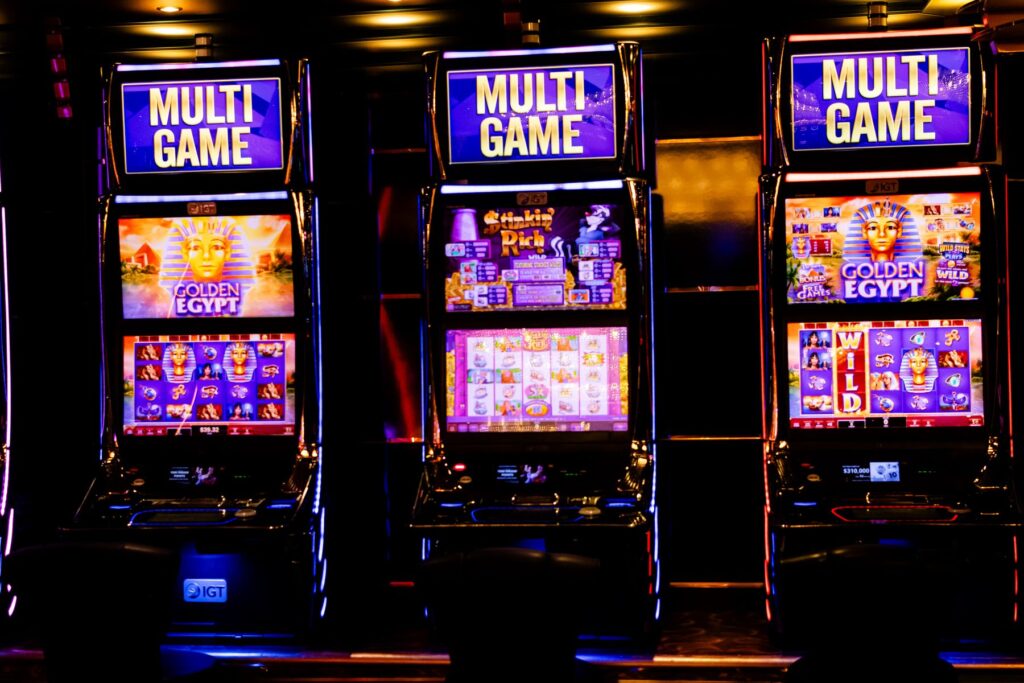
Bettors who’ve spent years studying odds and managing a bankroll often assume that skill goes out the window the second they open a slots game. Turns out, some of it travels with you.
If you’ve spent any real time betting on sports, you know it’s not only about picking winners. The real work happens behind the scenes. It’s managing your bankroll, reading probability and keeping your cool after a bad beat that could leave you rattled. At first glance, slots look totally different. No odds to study, no injury news and no shifting lines. Just bright lights and spinning reels. But look closer. Once the dazzle fades, there’s more in common with sports betting than you might think.
Where the two worlds meet
The connection between sports betting and slots isn’t about heavy strategy. Slots don’t care if you’re an expert at picking point spreads. The overlap comes from the habits: The way you manage your cash, stay patient and learn to look at the numbers instead of just going on gut feeling. That’s where sports betting habits help.
Betting operators get it too. Betway, for example, has slots right next to its sportsbook, so users can jump into a new game style but stay on familiar turf.
The discipline sports betting forces on you
If you’re betting on sports regularly, the toughest part usually isn’t picking the games, it’s managing your cash. You get burned if you don’t set limits. A 2025 NerdWallet survey showed that American sports bettors spend, on average, $3,284 each year. The median is much lower, about $750, which says a lot about how wildly betting styles range.
People who stay in the betting game for the long haul are usually the ones who set a number for the week or the month and stick to it. They don’t chase losses with bigger bets the next night. Drawing that hard line before emotions get messy is probably the number one skill you can carry over to slots. That kind of discipline applies as much to spinning reels as it does to firing off a parlay.
Reading probability instead of just reacting to it
Sports betting makes you pretty sharp with patterns after a while. You stop just reacting to the numbers and actually start thinking about what they mean. Bettors learn to compare the odds the book is offering against their own gut feeling about a game. That means before you throw down your cash, you ask, “what are the real odds here?”
Slots don’t hand you an odds board, but every game has its own return-to-player percentage and volatility rating. These are published and tell you a lot, like how often a game will pay and whether the big wins come in bursts or drips. Someone used to crunching numbers at the sportsbook is naturally going to check those stats before picking a slot.
Knowing when a hot streak is just noise
Sports betting also teaches you how to handle variance, usually the hard way. There’s nothing like a cold losing weekend to remind you that luck always swings back around. The urge to chase a bounce-back is strong in sports: Same story with slots, except here, those wild swings can happen in just a few minutes.
The whole industry has seen wild growth lately. U.S. commercial gaming hit a historic $78.72 billion in 2025. Online casino revenue alone shot up 27.6% year over year, according to the American Gaming Association.That’s serious momentum for the industry, but it doesn’t have anything to do with how you do on any one spin. If you’re used to treating a hot roll as just one data point, you’re already set up to keep your composure in slots.
When the wins do land, they’re memorable
Those huge wins in slots aren’t fairy tales. In January 2026, Caesars Entertainment reported that a player in New Jersey turned a $30 bet into a jaw-dropping $1,247,834.01 jackpot on an IGT MegaJackpots title, the biggest online payout in company history at the time. A few months later, Hard Rock Bet Casino in New Jersey saw three separate jackpots over $1.9 million hit in just weeks, including a $2.10 million win on July 4, 2026.
These are rare, obviously. Don’t walk into a slots lobby thinking you’ll walk out a millionaire. But stories like these explain why so many sports bettors are drawn to slots, looking for a thrill while they wait for the next game to start.
Two worlds not too far from each other
Sports betting and slots ask different things of you in the heat of the moment. One rewards deep research, the other is about knowing when to quit.
But those foundational habits, such as budgeting, patience and reading the numbers before leaping, move easily between the two worlds.